Affiliate Disclosure: This article contains affiliate links. We may earn a commission if you make a booking through these links, at no extra cost to you. Note: Travel regulations can change. Please check local advisories before booking your trip.
Backstory: Why We Are Obsessed with Chicago (The “Mafia II” Effect)
Backstory: Why We Are Obsessed with Chicago
(The “Mafia II” Effect)
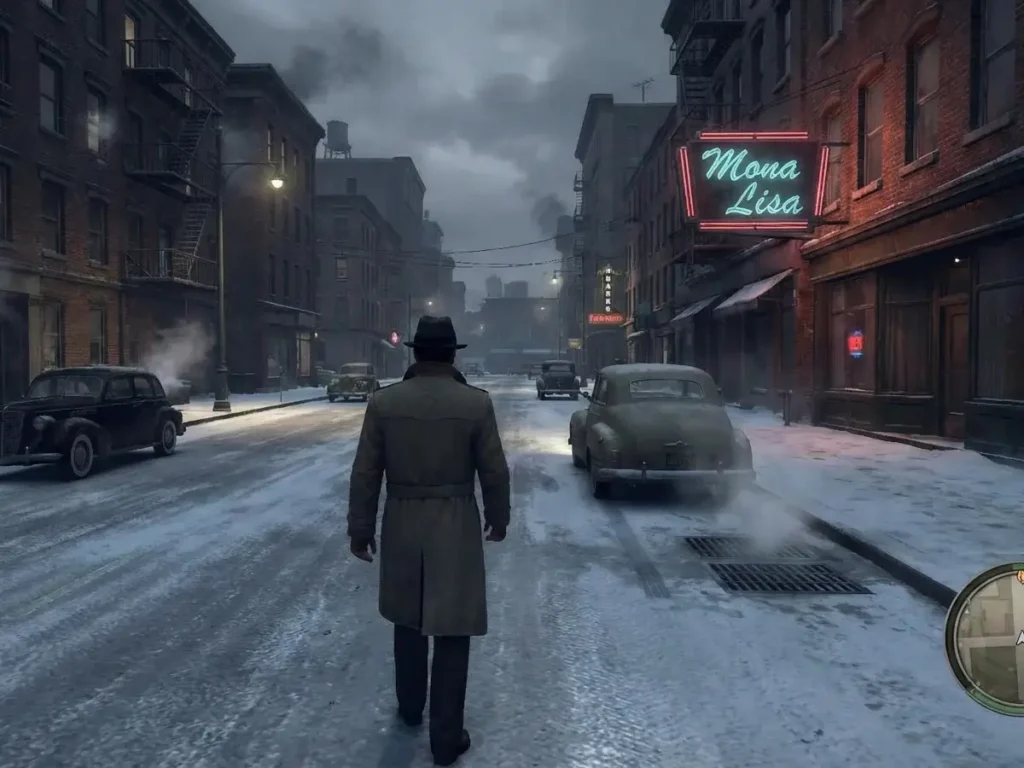
Do you remember those cold winter evenings in your childhood? Outside the window, it was dark and snowing, but you didn’t care. You were safe in your room, bathed in the glow of the monitor. You launched Mafia II. The iconic “Let It Snow” started playing on the radio.
You were no longer a kid doing homework. You were Vito Scaletta, fresh back from the war, stepping onto the icy platform of Empire Bay.
For many of us, that game was our first introduction to the “real” America of the 40s and 50s. We remember the weight of the heavy steel cars drifting on icy roads as we raced to a job. We remember the steam rising from the manholes, the rattling of the “L” train overhead, the fedoras, the trench coats, and the tension of a deal gone wrong in an old distillery.
“We grew up, but that feeling stayed.”
We realized that Empire Bay doesn’t exist. But Chicago does.
Chicago is the spiritual father of that atmosphere. It is the city of the real Al Capone, the real shootouts, and the real “outfits.” It is the city where the wind cuts through your coat just like it did in the game, and where the neon signs of jazz bars reflect on the wet asphalt exactly as you remember.
This guide isn’t just about finding a hotel. It’s about closing a gestalt. It’s about finally walking those streets, hearing the rumble of the train above your head, and feeling like the main character of your own noir movie.
Welcome to the real Empire Bay. Welcome to Chicago.
Introduction: The Most American City
If you are looking for the best hotels in Chicago to experience the true soul of America, you have come to the right place. New York may be the capital of the world, and Los Angeles might be the dream factory, but Chicago is the beating heart of the country.
Part 1: Fire and Resurrection (The Origin Story)
You cannot understand Chicago without understanding the year 1871. Prior to that date, Chicago was a boomtown built entirely of wood. Even the sidewalks were timber. It was fast, dirty, and dangerous. Then, on the night of October 8, legend says Mrs. O’Leary’s cow kicked over a lantern in a barn on DeKoven Street.
The Great Destruction
Whether it was the cow or not, the result was the Great Chicago Fire. For two days, a wall of flame swept through the city. Consequently, it destroyed 17,000 buildings and left 100,000 people homeless. The city was leveled. Logically, it should have been the end.
The “I Will” Spirit
However, instead of fleeing, the people of Chicago looked at the smoking ruins and decided to double down. This birthed the famous “Chicago Spirit.” Just days after the fire, merchants set up shop on smoking rubble with signs that read: “All Gone But Wife & Children. Business as Usual.”
Because the city had to be rebuilt from scratch, it became a blank canvas for the world’s greatest architects. As a result, they decided not just to build up, but to build high. The world’s first skyscraper, the Home Insurance Building, rose here in 1885.
The White City Spectacle
Remarkably, just 20 years after burning to the ground, Chicago hosted the World’s Columbian Exposition. It built a neoclassical “White City” that dazzled the world with electricity and the first Ferris Wheel. Ultimately, it proved that Chicago wasn’t just a slaughterhouse; it was a sophisticated metropolis.
- Must Visit: Walk through Jackson Park. The Museum of Science and Industry is the only major building left from that fair.
Part 2: The Outfit, Prohibition, and Al Capone
If the architecture is the city’s face, the Mafia is its shadow. In the 1920s, the 18th Amendment banned alcohol. For Chicago, situated perfectly as a transport hub, this was purely a business opportunity. Eventually, this era brought us Alphonse Gabriel Capone—Al Capone.
The Reign of Scarface
Capone didn’t just run the city; he effectively owned it. At his peak, he was making $100 million a year. Furthermore, he was a celebrity, cheering at Cubs games and opening soup kitchens for the poor, all while ordering brutal hits on his rivals.
Subsequently, the violence culminated in the St. Valentine’s Day Massacre in 1929. Seven members of the rival North Side Gang were lined up against a wall in a garage and gunned down by Capone’s men dressed as police officers.
Where to Find the “Ghosts” of the Gangsters Today
You cannot visit Chicago without paying homage to this era. However, skip the cheesy museums; go to the real spots.
- The Green Mill Cocktail Lounge: This was Capone’s favorite jazz club. Surprisingly, it is still open. You can sit in “Capone’s Booth”—positioned so he could see both doors.
- Harry Caray’s Italian Steakhouse: This building was once Frank Nitti’s apartment. Specifically, you can visit the basement to see the actual vault.
- The Untitled Supper Club: A modern tribute to the speakeasy vibe, hidden behind huge unmarked doors.
Part 3: The Magic of the Architecture (The River)
There is a specific kind of magic in Chicago that happens when you look up. Unlike New York, which can feel like a canyon where you can’t see the sky, Chicago is open. The architecture here is designed to be seen.
The River Reversal Engineering
First of all, the Chicago River is an engineering miracle. In 1900, the city realized their sewage was flowing into Lake Michigan, which was their drinking water. Therefore, they did the impossible: they reversed the flow of the river.
The Essential Architecture River Cruise
This is the single most important thing you must do. It is certainly not a tourist trap; it is essential.
- Why? You sit on a boat, a drink in hand, gliding through a canyon of glass and steel. For example, you see the Marina City (the “Corn Cobs”) and the massive Merchandise Mart.
- The Magic Moment: Do this cruise at sunset. Watching the sun reflect off the Willis Tower while the city lights turn on is, without a doubt, a spiritual experience.
Part 4: Decoding the Neighborhoods (Where to Stay)
Chicago is massive, but visitors usually stick to a few key areas. Choosing the wrong one can ruin your trip. Here is the WIIFM breakdown.
1. The Loop (Downtown Core)
This is the historic center, encircled by the elevated train tracks (“The L”).
- The Vibe: Business, frantic energy, shadows of the L tracks.
- Pros: You are close to Millennium Park (The Bean), the Art Institute, and the Theater District.
- Cons: It becomes a “ghost town” after 6:00 PM when office workers go home. Not much nightlife.
- Best For: First-timers, theater lovers, and history buffs.
2. The Magnificent Mile / River North
Located just north of the river.
- The Vibe: Glitzy, shopping, luxury, bustling.
- Pros: This is where the action is. Endless restaurants, rooftop bars, and luxury shopping. It feels safe and alive 24/7.
- Cons: It is expensive and crowded with tourists.
- Best For: Luxury travelers, shoppers, and those who want to be in the center of the mix.
3. West Loop
The former meatpacking district.
- The Vibe: Trendy, industrial-chic, foodie heaven.
- Pros: This is currently the “coolest” neighborhood. The best restaurants in the city (Au Cheval, Girl & The Goat) are here.
- Cons: Fewer hotels (though growing), slightly further from the classic tourist sights.
- Best For: Foodies and younger travelers.
4. Gold Coast
North of the Mag Mile.
- The Vibe: Old money, brownstones, quiet luxury.
- Pros: Beautiful streets, very safe, close to the lakefront beaches (Oak Street Beach).
- Cons: Can feel a bit sleepy and very expensive.
- Best For: Romance and quiet luxury.
Part 5: Our Guide to the Best Hotels in Chicago
Chicago hotels are landmarks in themselves. We have selected three hotels that represent the different souls of the city: The Historic Legend, The Architectural Icon, and The Modern Luxury.
(Note: Click the button below to check real-time availability and prices via Hotels.com).
👻 The Historic Legend: The Palmer House Hilton
- Location: The Loop.
- The Story: This is America’s longest-operating hotel. It was a wedding gift from Potter Palmer to his wife Bertha. It burned down in the Great Fire just 13 days after opening and was rebuilt even grander.
- Why stay here:
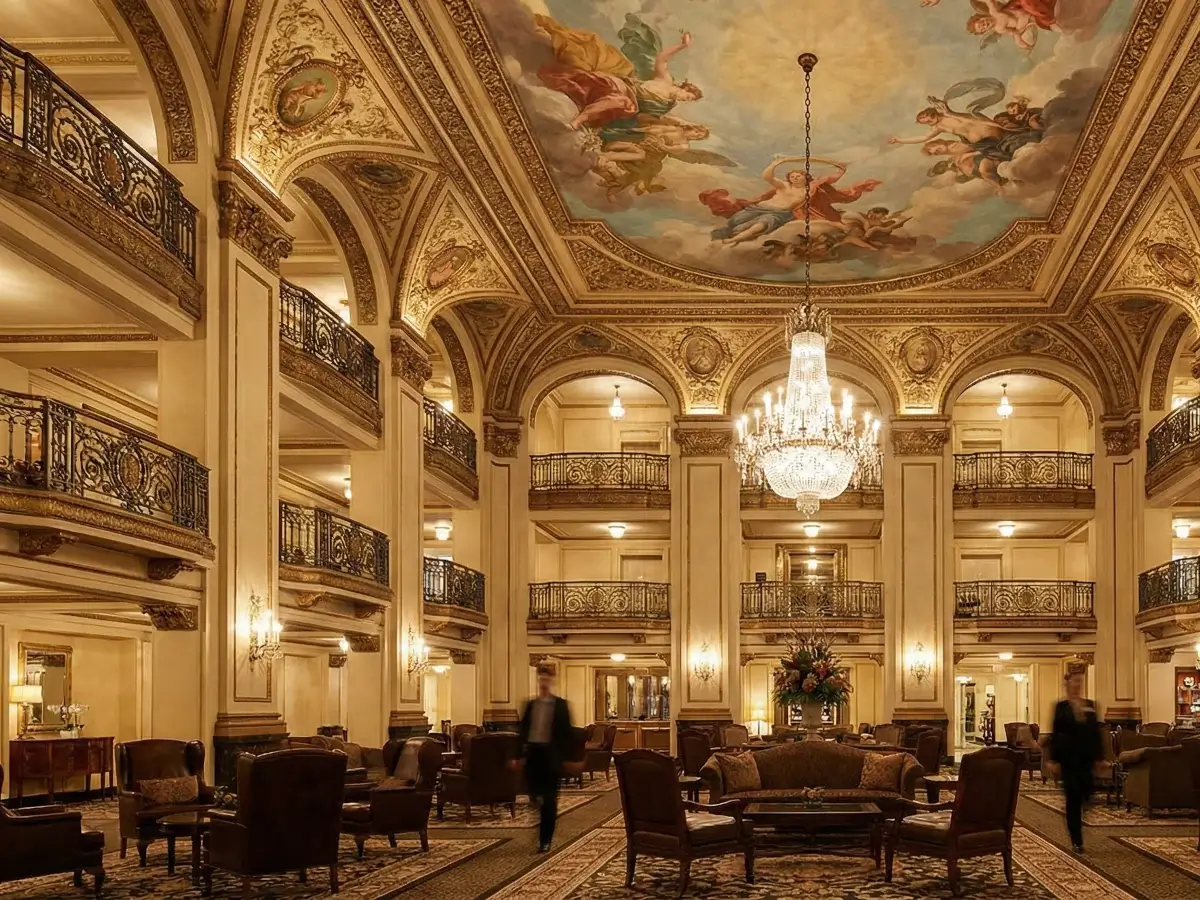
- The Lobby: It is breathtaking. The ceiling is painted with frescoes that rival the Vatican.
- The Brownie: The chocolate brownie was literally invented here in 1893 for the World’s Fair. You can still order the original recipe in the lobby.
- The Vibe: It feels like stepping back into the Gilded Age.
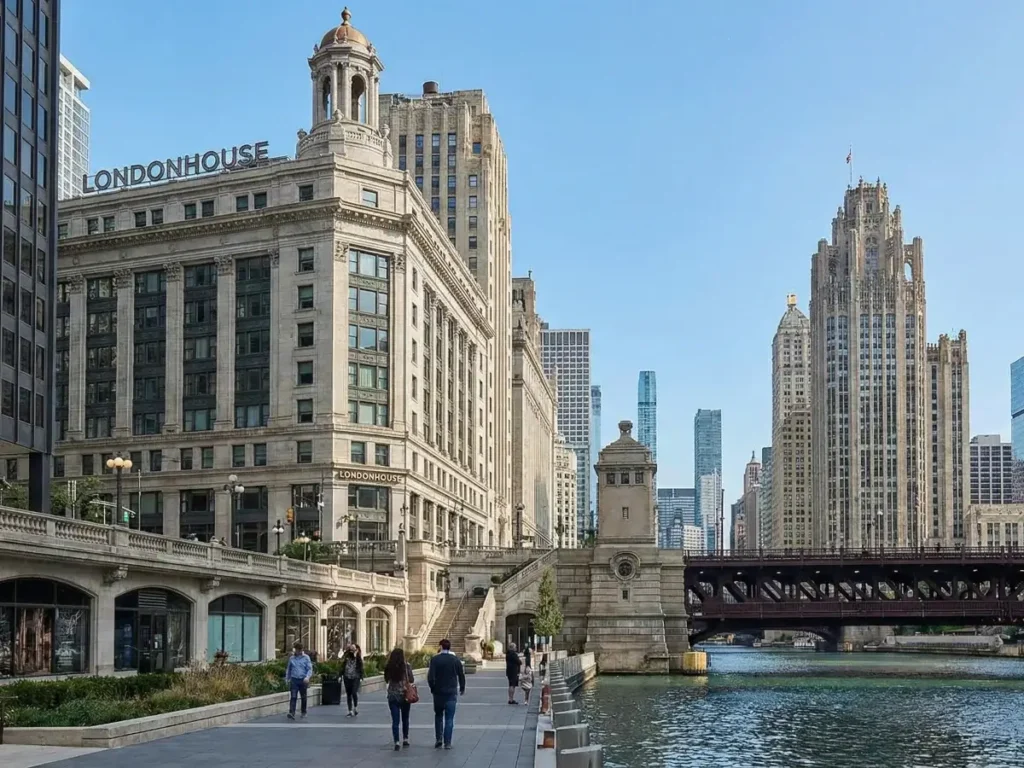
🏛️ The Architectural Icon: LondonHouse Chicago, Curio Collection
- Location: The River (Mag Mile/Loop border).
- The Story: Built in 1923 on the site of Fort Dearborn (where Chicago began). It was once an office building and a famous jazz club.
- Why stay here:
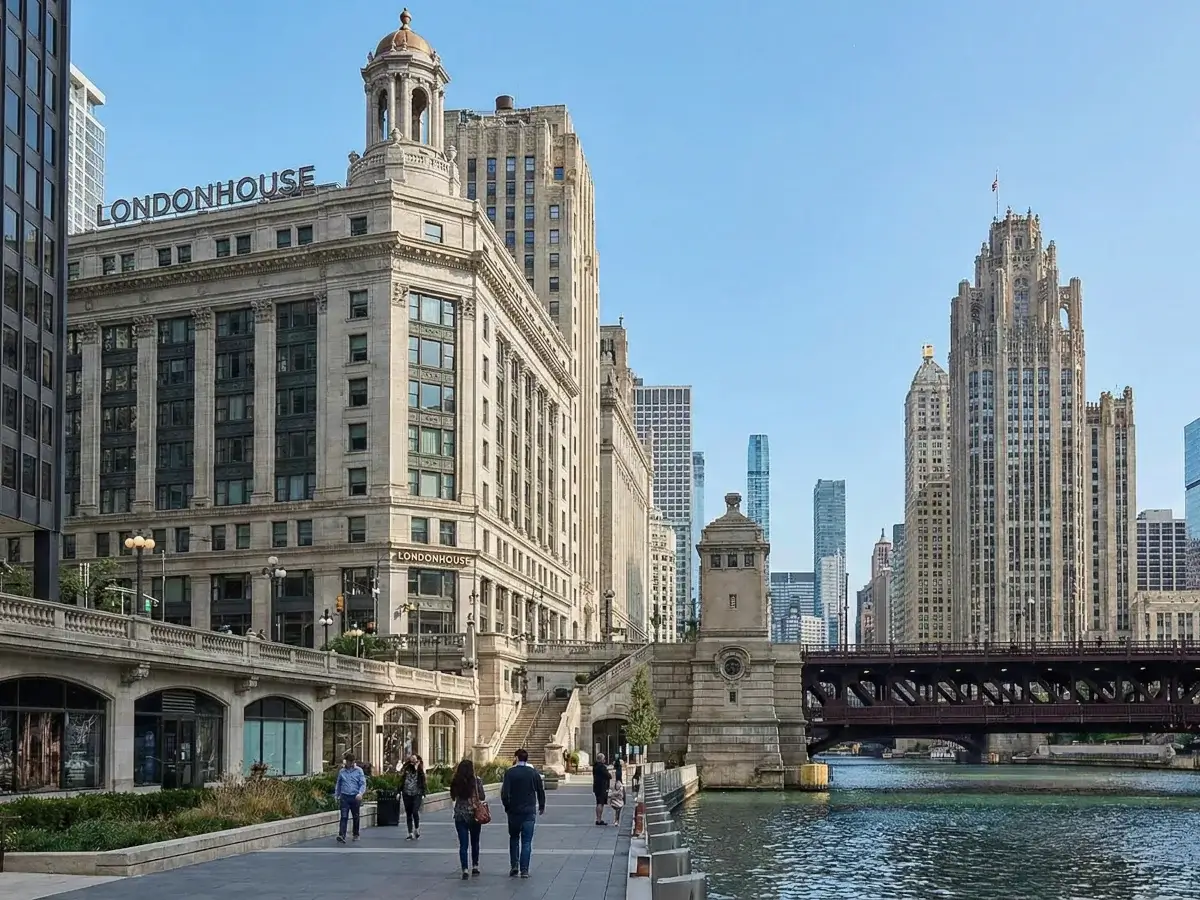
- The View: The rooftop bar (LH Rooftop) has arguably the best view in the entire city, looking straight down the river between the skyscrapers.
- The Rooms: Modern, sleek, but housed inside a classical limestone shell
- You are paying for the view and the location. It is unbeatable.
💎 The Modern Luxury: The Langham, Chicago
- Location: River North (Mies van der Rohe building).
- The Story: Housed in a skyscraper designed by Mies van der Rohe, the father of modern architecture.
- Why stay here:
- Service: This is often voted the #1 hotel in the US. The service is telepathic.
- The Spa: Chuan Spa is based on Traditional Chinese Medicine and is the best place to escape the Chicago winter.
- If budget is not an issue and you want perfection, this is it.
Part 6: Practical Survival Tips (The Windy City)
1. The Weather is No Joke They don’t call it the “Windy City” because of the breeze (actually, that nickname came from politicians talking too much!), but the wind is real.
- Winter (Jan-Mar): It is brutal. We are talking -20°C with wind chill. However, hotel prices are incredibly low.
- Summer (Jun-Aug): It is humid and hot, but the city comes alive with street festivals every weekend.
- Best Time: September and October. The air is crisp, and the crowds are smaller.
2. Transport: Master “The L” Don’t rent a car. Parking in downtown Chicago can cost $70 per night.
- The Solution: The CTA trains (The L) are cheap ($2.50) and go everywhere. From O’Hare airport, you can take the Blue Line directly into the city for $5. It’s safe, fast, and authentic.
3. Safety Chicago gets a bad reputation in the news. However, the areas where tourists stay (Loop, River North, Gold Coast, Lincoln Park) are generally very safe.
- Rule of Thumb: Be aware of your surroundings on the train late at night. Avoid the “Red Line” south of 35th street unless you know exactly where you are going (to a White Sox game, for example).
Conclusion: Why Chicago Will Steal Your Heart
Chicago is a city that works for a living. It doesn’t have the pretension of New York or the superficiality of LA. It is honest.
You come for the pizza (Deep Dish is a must, try Lou Malnati’s), you stay for the architecture, but you return for the people. There is a warmth here that defies the freezing winters.
Whether you are sipping a Prohibition-era cocktail in a dim basement, staring at your reflection in The Bean, or waking up in a hotel room that overlooks a canyon of steel, Chicago makes you feel part of its story.
Are you ready to write your chapter?
Explore the best deals for your Chicago adventure below.
👇 Find Your Hotel in the Windy City
Check Chicago Hotel Deals 🏙️From historic luxury to modern views.
Hotels.com compensates authors for their writings appearing on this site; such compensation may include travel and other costs. HOTELS.COM is a trademark or registered trademark of Expedia, Inc.
The Palmer House Hilton
Summary
Staying here is like sleeping in a museum. The lobby is one of the most beautiful rooms in America. Perfect for history buffs, but be aware that standard rooms can be compact.
LondonHouse Chicago Review
Summary
The best location in the city. You are steps from the Mag Mile and the Theater District. The rooftop bar is iconic. Highly recommended for couples and those who want a view.
The Langham Chicago Review
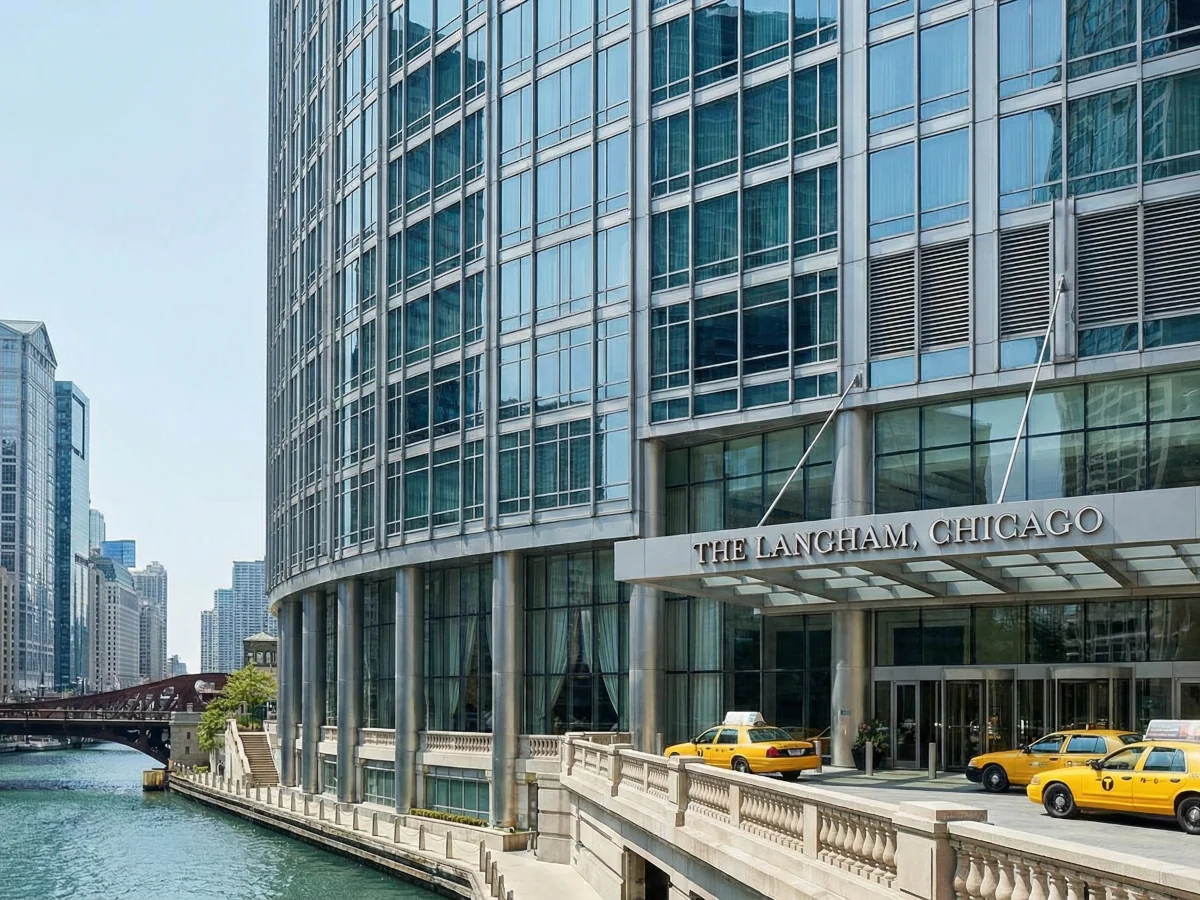
Summary
If you want perfection, this is it. It is pricey, but the service, the pool, and the river views are unmatched. The ultimate splurge.
Bądź na bieżąco!
Zapisz się, aby nie przegapić nowości na Review Space.
Join Our Newsletter
No spam. Unsubscribe anytime.